





Building or renovating a home in Africa from Dubai raises one practical question: who is accountable when the drawings, the made-to-measure joinery, the imported stone and the installation all come from different places? On a larger project with imported materials, a Dubai design-and-build firm puts all four under one contract, so a late shipment or a joinery piece that does not fit has a single owner. For a small refresh using local materials, a local designer is usually simpler and cheaper.
This guide sets out what a design-and-build firm does on a house in Africa, how the work is run from a distance, which approvals apply in Lagos, Kampala, Nairobi and South Africa, how imports affect the schedule, what to check in a quote, and how to verify a firm’s record. It draws on how Rayfitout delivers homes across West, East and Southern Africa.
What does a design-and-build firm handle on a home in Africa?
It takes the home from first brief to handover under one contract. On a Rayfitout project that means five services, which can be bought together or separately:
- Turnkey design and fit-out: concept, technical drawings, procurement, construction and installation on one programme.
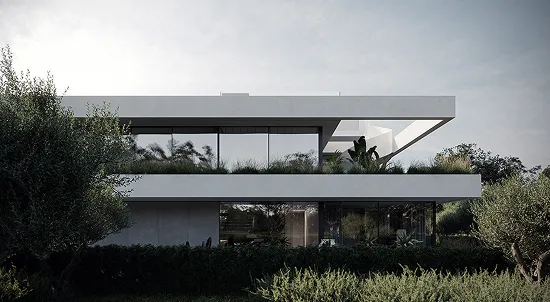
- Villa interiors: complete interiors for villas, compounds, townhouses and homes in branded communities, with every room designed as part of one scheme.
- Penthouse and apartment interiors: space planning, finishes, lighting and installation for high-rise homes.
- Material procurement: specifying and buying stone, fittings, lighting and furniture from European, North American and UAE suppliers, with samples approved before any order is placed.
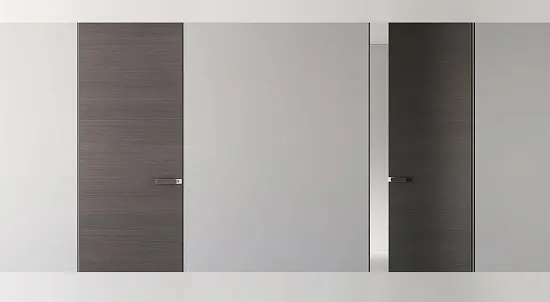
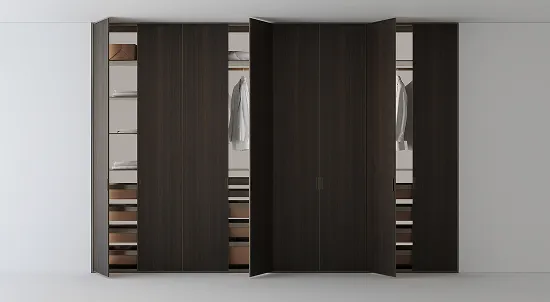
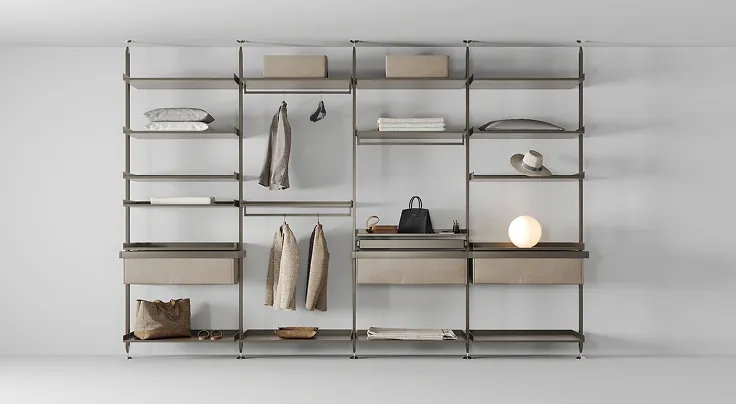
- Bespoke joinery and furniture: pieces drawn to the dimensions of your rooms and built to approved drawings.
Rooms covered include bedrooms, kitchens, bathrooms, home offices, walk-in closets, entrance foyers, home cinemas and majlis spaces.
Rayfitout has 37+ years of experience as a Dubai-based design-and-build firm, and the bespoke joinery for Africa projects is built in its own Dubai workshop.

What are the advantages of an international firm over a local one?
The main advantage is one accountable party. If a marble slab arrives chipped or a wardrobe is a few millimetres too wide for its niche, you do not have to work out whether the designer, the supplier or the builder is responsible. Four further advantages follow:
- Specification and supply together: the team that draws a kitchen island also orders the stone for it, so the order matches the drawing.
- Checks before shipping: a fit problem found in the workshop is corrected before the shipment leaves. The same problem found on a site in Accra or Kampala can hold up the whole programme.
- The same stages every time: every home follows the same sequence, so you always know what has been approved and what comes next.
- Integrated design and production: the people who draw the pieces are in the same organisation as the people who make them.
Local firms have their own strengths. They know the municipal offices, the local suppliers and the labour market, and you can meet them without a flight. That is why an international firm usually works with local trades on site.
How does a Dubai-based firm manage a project in Lagos, Nairobi or Accra?
It runs the job through a named contact, a site team and a regular reporting routine. The design and material sign-offs are covered further down, so this section is about who is responsible and how you hear about progress:
- Named contact: one person answers for the job from brief to handover, so you never have to work out who to ask.
- Site team: a site team installs the work and coordinates the trades, such as electrical, plumbing and finishing.
- Progress reports: you receive updates with dated photographs of the site and of joinery in production.
- Written decisions: anything that changes the scope, the cost or the programme is raised in writing and approved by you before it goes ahead.
- Snagging and handover: a snagging list is cleared before handover, and the handover is documented.
Three questions test whether any firm can run a project from a distance:
- Who is my named contact, and how often will I receive a report?
- Who can approve a change on site, and does it need my written sign-off?
- How are payments tied to stages, and who certifies that a stage is complete?

Which approvals does a home renovation need in Lagos, Kampala, Nairobi and South Africa?
Each place has its own authority and its own rules, so approvals are planned for the specific city. Four examples:
| Place | Authority and rule | What it means for a homeowner |
|---|---|---|
| Lagos, Nigeria | Lagos State Physical Planning Permit Authority, under the 2019 Physical Planning Permit Regulations | A renovation permit is required before work starts, under Regulation 5A of the 2019 regulations. The regulations define renovation as work that improves a building’s appearance, such as changing windows and doors, re-plastering, reroofing, replacing floor coverings, recladding, retiling, kitchen or bathroom remodelling, and plumbing and electrical work. They exclude structural changes. If there is no earlier permit, as-built plans are submitted. Sources: Legal 500 analysis and Nairametrics. Confirm with the authority which permit your scope needs. |
| Kampala, Uganda | Kampala Capital City Authority (KCCA), Physical Planning Committee | You pay an assessment fee and submit the plans at KCCA’s customer care desk, where you receive the submission checklist. The committee approves, defers or rejects the plans on technical staff recommendations and field findings, and rejected plans can be reconsidered after changes. For an existing building, KCCA also asks for a structural integrity report from a registered engineer. Its development applications FAQ gives “within 3 months” in one answer and “ideally one month or less”, up to 2 months in a backlog, in another, so plan for up to three months. Temporary construction permits are no longer issued. |
| Nairobi, Kenya | Nairobi City County | In March 2025 the county governor announced that approval times for building plans and permits would be cut from six months to two weeks. By May 2025 engineers told The Star that the change had yet to take effect, so treat two weeks as a target and confirm the current position. |
| South Africa | Local municipality | An application form, plans signed by a registered architect or draughtsperson, ID, the title deed, a recent rates account and the submission fee. Under Section 13 of the National Building Regulations and Building Standards Act, the municipality’s building control officer can exempt “minor building work”, as the national building regulations define it, from submitting plans. Typical examples include pergolas and free-standing walls up to 1.8 m high. Other work, including anything affecting the structure, needs approved plans before it starts. Ask the municipality whether your scope counts as minor. |
Other countries follow the same pattern. In Ghana, for example, permits start with the metropolitan, municipal or district assembly where the property sits, since that body issues building permits. It is the first thing we confirm when delivering luxury interior design in Ghana. Check with the relevant authority before you plan a programme in any country, because these rules change.
Ask any firm who prepares and submits the approval drawings, who tracks the application, and what happens to the programme if a permit is late.
How does Rayfitout handle design and material approvals remotely?
We take clients through approvals in five stages, using documents you can review from anywhere. Each stage builds on the one before:
- Concept: we present mood boards and layout options that show the direction of the home and the overall material palette, and you confirm or adjust it.
- Development drawings: we draw up the agreed concept in detail, so you can check layouts, dimensions and finishes on paper.
- 3D visualisation and technical documents: we produce 3D images of rooms and joinery before anything is made, together with a bill of quantities, ceiling plans and joinery drawings that fix the scope and the price.
- Material approval: we submit samples and specifications for stone, fittings and finishes, and agree a procurement schedule with you, before we order anything.
- Production approval: we inspect joinery and furniture in our Dubai workshop before shipping, with a dry-lay check where it applies (the pieces are assembled to confirm the fit), so the made pieces match the approved drawings.
Two habits make remote approval work. Keep a written record of every decision, with the date and the version of the drawing you approved. And send feedback as one consolidated list per round, since scattered comments are where requests get missed.
Want these stages mapped for your own property? Talk to us about your project.
Do international firms work with local contractors?
Yes, for the parts of a build that depend on local labour and local permits, such as civil works, site labour and dealing with the authorities. The design firm sets the standard, supplies the specified materials and supervises quality. The arrangement works only when the contract settles four points:
- Who employs and pays the site labour.
- Who is responsible for defects in local work.
- Who deals with the authorities and holds the permits.
- Who inspects the work before each stage payment.
How does importing materials affect the programme?
Imported stone, lighting, fittings and furniture usually set the schedule, because they travel the longest route and clear customs before they reach the site. Nigeria shows why: customs there moved to the ECOWAS Common External Tariff in April 2022, and supplementary levies can push effective rates on some products well above the headline band, according to the US government’s country commercial guide (September 2025). That is why, on our interior design in Nigeria work, we ask for duties to be quoted line by line, since they differ by country and by product.
Three habits keep imports under control:
- Order long-lead items first: stone slabs, bespoke lighting and made-to-measure furniture should be confirmed early, even if the site is months from needing them.
- Work from a procurement schedule: a list of each item, supplier, order date and required-on-site date shows exactly where a late delivery will hit the programme.
- Ask who clears customs: the firm or its freight agent should name who handles clearance, who carries the risk of damage in transit, and what is inspected before shipping.
How are changes, variations and payments handled?
Changes are normal. What matters is that each one is priced and approved before it is built. A change before final design approval is usually cheaper, because little has been ordered or built. A change after approval can affect orders already placed, work already started and the programme, so it goes through a written variation with four parts:
- The change is requested in writing.
- The firm states the cost and the effect on the programme.
- You approve it in writing before work or ordering starts.
- The variation is recorded against the contract.
Payments work best when they follow stages, not dates. Typical stage triggers are design approval, procurement, delivery to site, installation and handover, and each payment should be tied to a stage that someone has certified as complete.
Is a Dubai design-and-build firm more expensive than a local designer?
Not necessarily. The design fee may be higher, but the cost to handover depends on what each quote includes. Note: These are not fixed market rates, and no firm can name a total without a brief.
Two quotes for the same home often cover different things. Compare them line by line:
| Check | Why it matters |
|---|---|
| A written list of included and excluded works | Excluded items become your cost later |
| Freight, customs duties and insurance | Imported materials add costs that a local quote may not show |
| VAT or local taxes as a separate line | Lets you compare totals on equal terms |
| Material allowances | A low allowance on stone or fittings makes a quote look cheaper than it is |
| Price of a change after approval | Variations are where budgets drift |
| Payment stages and what triggers each | Ties your money to finished work |
An international firm adds travel and shipping to the price. A split job adds costs of its own: delays while the designer, the contractor and the supplier wait on each other, rework when drawings and site work disagree, and the cost of your own time spent managing it. Compare the total to handover, not the design fee alone. Agree stone and fitting allowances early, and approve any substitution in writing.

How can you check an international firm’s track record in Africa?
Check finished projects, not promises. Ask for examples in your country or a comparable climate, then verify them:
- Project details: ask for names, locations, floor areas and photographs of completed homes, so you can compare their size with yours.
- A past client: ask to speak to one about delivery, communication and how problems were handled.
- Years of trading: ask how long the firm has operated and which management certifications it holds.
- A past problem: ask what went wrong on an earlier project and how it was fixed.
You can browse Rayfitout’s completed projects before you commit. In Africa they include:
- a villa in Nairobi, Villa Sylvora, where we handled architecture and interior design across 6,309 sqm;
- a modern villa in Cape Town, an 18,000 sqft design with garden terraces and large windows;
- a villa fit-out in Kampala, 11,000 sqft of interior design and fit-out;
- a private penthouse in Kampala, 9,000 sqft;
- a private villa in Accra, where we worked on the architecture.
What should you look for in a design-and-build firm for Africa?
Look for a firm that can show how it handles distance, imports and approvals, not only how its finished rooms look. Five criteria are worth testing:
- Production capability: does the firm make its own joinery, or buy it in? In-house production gives control over finish, fit and schedule.
- Climate engineering: are windows, hardware and finishes chosen for the local climate, or copied from a Dubai specification?
- Documentation: will you receive drawings, a bill of quantities and a procurement schedule before work starts?
- Certified management systems: which standards does the firm hold, and can it show the certificates?
- Presence on the ground: who is on site, and where is the nearest office?
Here is how Rayfitout answers each. Our bespoke joinery workshop in Dubai covers carpentry, aluminium fabrication, powder coating and upholstery, and it is the facility we use for Africa projects. Our research and engineering team selects windows, hardware and systems for the conditions they will sit in. Our management systems are certified to ISO 9001, ISO 45001 and ISO 14001, and we are a member of the Architectural Woodwork Institute. Our interior design company in Kenya has a physical office, which gives East African projects a local base.

Conclusion
A home in Africa asks more of a design firm than a home next door: a different climate, imported materials in transit for weeks, and an owner who is often elsewhere. A design-and-build firm answers that by keeping design, production and installation under one contract, with documents that fix the scope before work begins.
Planning a home in Africa from Dubai? Share your project location, property type, design requirements, estimated budget and target completion date with Rayfitout. Our team can review your requirements and recommend a suitable approach, whether you need design, bespoke joinery, material procurement or complete design and fit-out services. Drop an inquiry to get started.
Frequently Asked Questions
Will the design team visit the site in person?↗
On most projects an early site visit is worth the cost, because it confirms measurements, access and local conditions. Ask any firm how many visits are included and who pays for travel.
Can one firm handle design, joinery and fit-out in different African countries?↗
Yes, if it has its own design team, its own production and a way to manage work on the ground in each country. Rayfitout covers design, joinery and fit-out under one scope in the countries it serves.
Can I hire Rayfitout for design only?↗
Yes. Design, procurement, joinery and fit-out can be bought together or separately. Taking them together puts one party in charge from the first drawing to handover.
Does Rayfitout have an office in Africa?↗
Yes. Rayfitout has a physical office in Nairobi, Kenya, alongside its Dubai headquarters. It gives East African projects a local base and acts as an additional point of coordination for international projects elsewhere in the region, such as Nigeria.
Can Rayfitout renovate an existing home, or only fit out new ones?↗
Both. Renovation and fit-out of existing villas, duplexes and apartments is part of the service, which is why the approvals section above covers renovation permits as well as new building work.


